
When buyers ask us what happens after an order passes inspection, the honest answer is: the shipping work starts. Cold drawn steel is long, bright, and unforgiving in transit. One bent bar, a patch of rust, or a missing bundle label means either a rejection at the port or a claim later. Below is how we pack and load export orders at our Suzhou plant.
Bright bars leave the precision drawing line with a smooth, scale-free surface. That surface is easy to scratch, and a six-meter bar flexes inside a shipping container like a diving board. On a three-to-six-week sea voyage, the container interior swings from cold night air to hot midday sun, condensation forms on the walls, and bare steel picks up surface rust within days. Our packing is built around three things: keep the surface untouched, keep moisture out, and keep every bundle identifiable from the yard to the buyer's warehouse.
Before bundling, each length gets a rust-preventive film or VCI paper wrap, with end caps on round and hexagonal bars. For shipments to humid regions or rainy-season sailings, we add desiccant bags inside each bundle. We do not paint or oil the bright surface unless the customer asks. The goal is to arrive at the buyer's machine shop with the same finish it left the straightener.
Bundles are built to crane-lift weight, not arbitrary counts. Round bars and hex bars go in strapped bundles; flat and square sections go in layered packs, held by green PET strapping at both ends. Every bundle carries a tied-on tag with grade, section size, heat number, piece count, and net weight. The outer shipping mark follows the buyer's design — the SPYC-TA carton in our photos is a customer's own mark, not ours. If your freight forwarder or consignee needs a specific mark layout, send it with the PO.
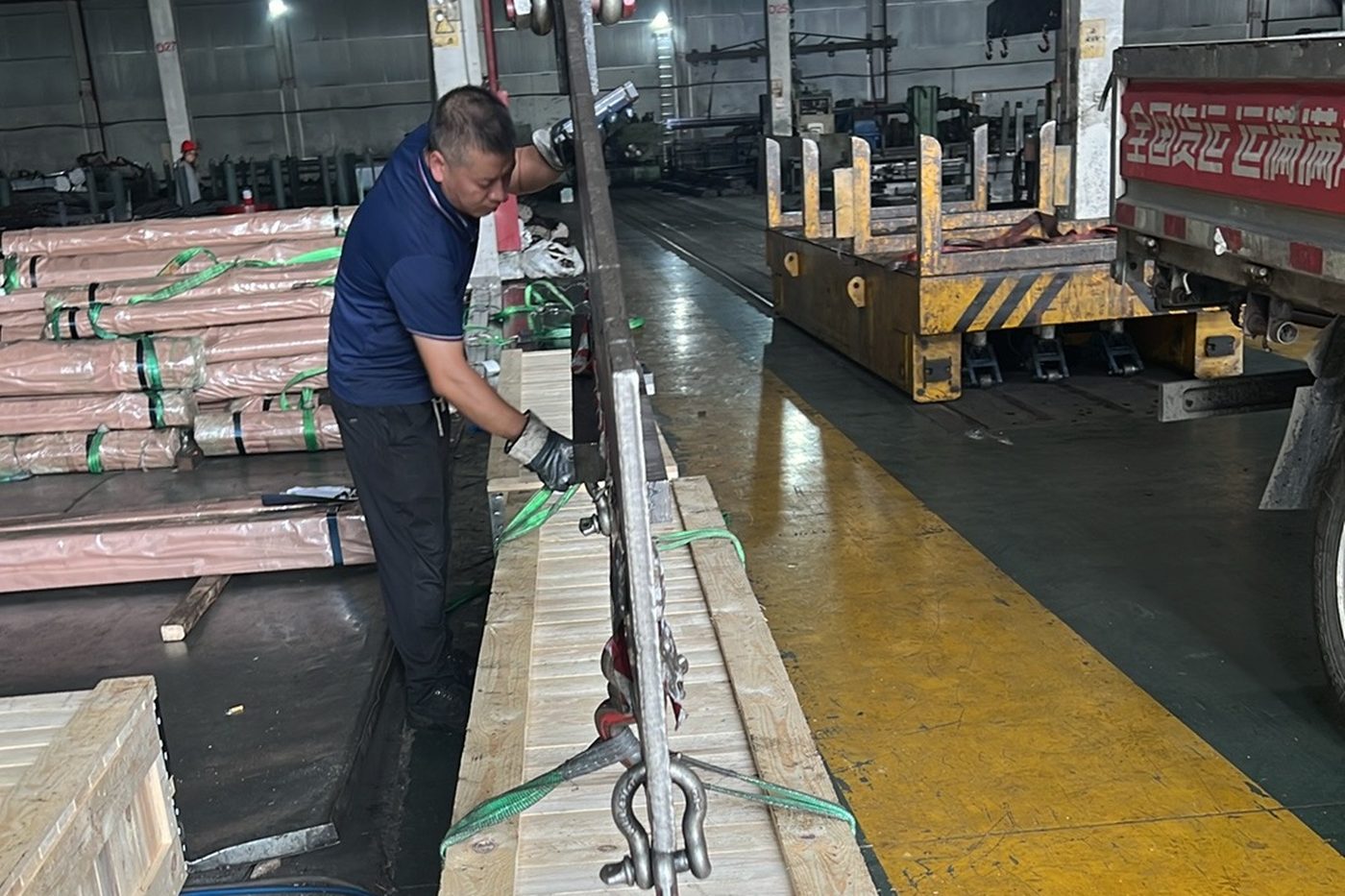
A bundle being weighed on the crane scale before wooden-case packing. Every crate is weighed again and the ticket goes in the shipping documents.
Very long bars, precision-ground sections, or sample orders go in fumigated wooden cases with IPPC stamps. The case is lined with moisture barrier, the steel is cushioned at the corners, and the whole crate is lifted by overhead crane and weighed before it leaves the workshop. Crates like this are heavier to lift but survive rough port handling that would crush a strapped bundle.
Loading is where most freight damage actually happens. We load 20-foot and 40-foot containers by hand-fitting bundles: heavier packs low, longer bars on the floor line, lighter packs on top. Steel straps and wire rope with turnbuckles tie the stack to the container lashing rings, and wood dunnage fills the empty gaps so nothing shifts at sea. Once the doors close, we shoot photos: the loaded interior, the container number, and the seal number, and send them with the packing list so you know exactly what went in before the vessel sails.
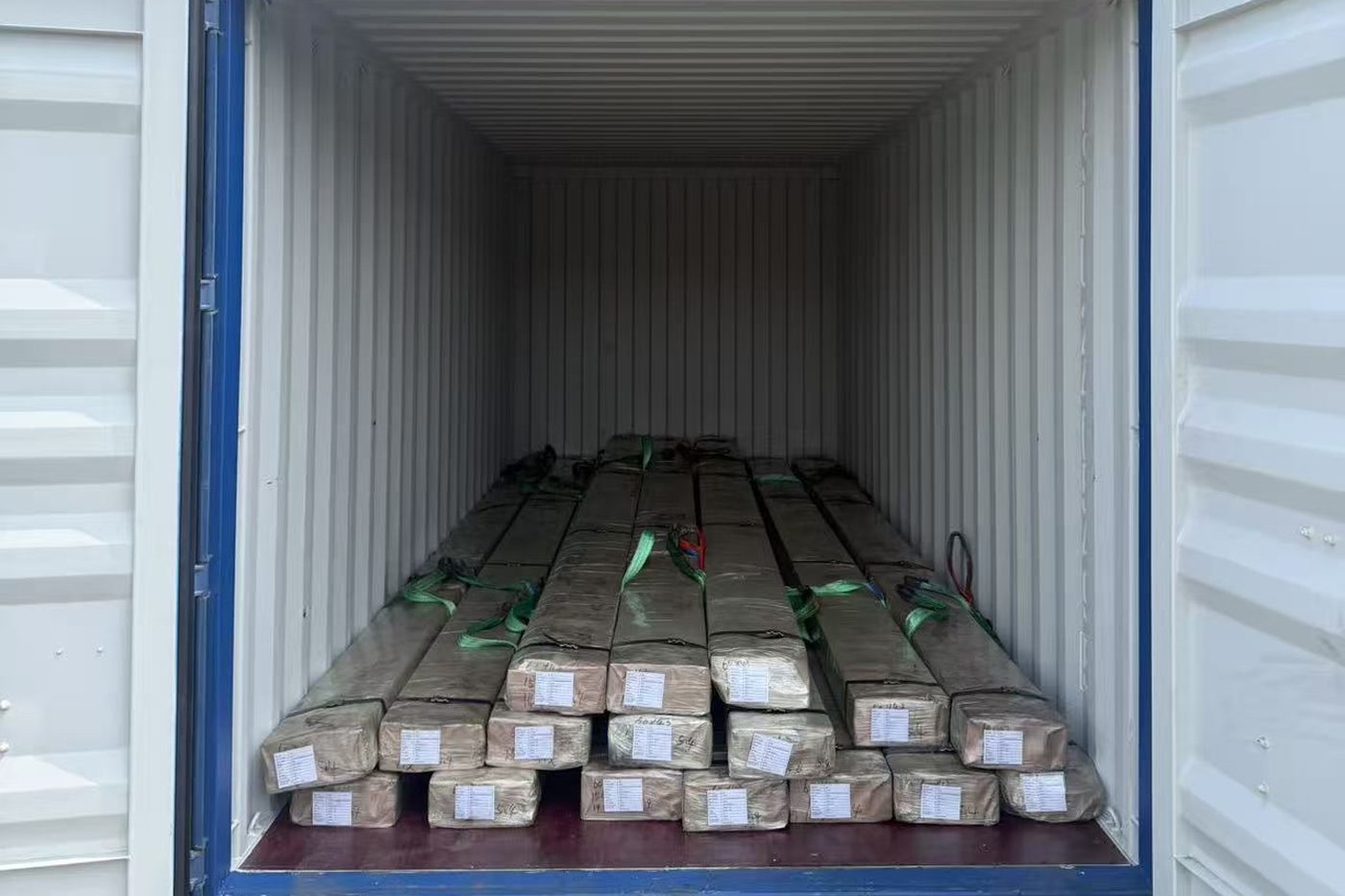
A loaded 20ft container. Bundles are tagged on the outside and strapped to the container floor.
Over the years we have seen buyers reject three things at the receiving end. First, short weight: bundles shipped without a verified weighing ticket always end up in a dispute. That is why every container and every crate leaves with a printed weight ticket from the workshop scale. Second, mismatched marks: bundles tagged one way and the packing list another means your receiver cannot split the cargo against three subcontractors without sorting it themselves. We re-check every tag against the packing list before the doors close. Third, surface rust that could have been prevented: usually a missing desiccant in a humid-season container. We have stopped arguing about whose fault it is — we just pack for the worst-case voyage.
Standard in-stock sections ship within 3 to 7 working days after deposit. Custom sections — special sizes, special grades, machined ends — depend on the drawing confirmation and heat delivery, usually 15 to 35 days. For each order we send the commercial invoice, packing list, mill test certificate, certificate of origin (when required), and the container photos plus seal number. We work under FOB Shanghai / Ningbo, CFR, and CIF terms, and can book the vessel on our account or use your nominated forwarder.
We run eight cold drawing lines from 8-ton up to 120-ton capacity, two electric annealing furnaces, and six high-precision straighteners, with annual output around 150,000 tons. Standard sections — cold drawn flat steel, square steel, hex and bright round — are kept in stock and can be packed and loaded within a few days of order confirmation. Custom sections follow the same packing flow once they pass final inspection. If you want to see how the bars are produced first, read our piece on how cold drawn steel is made.
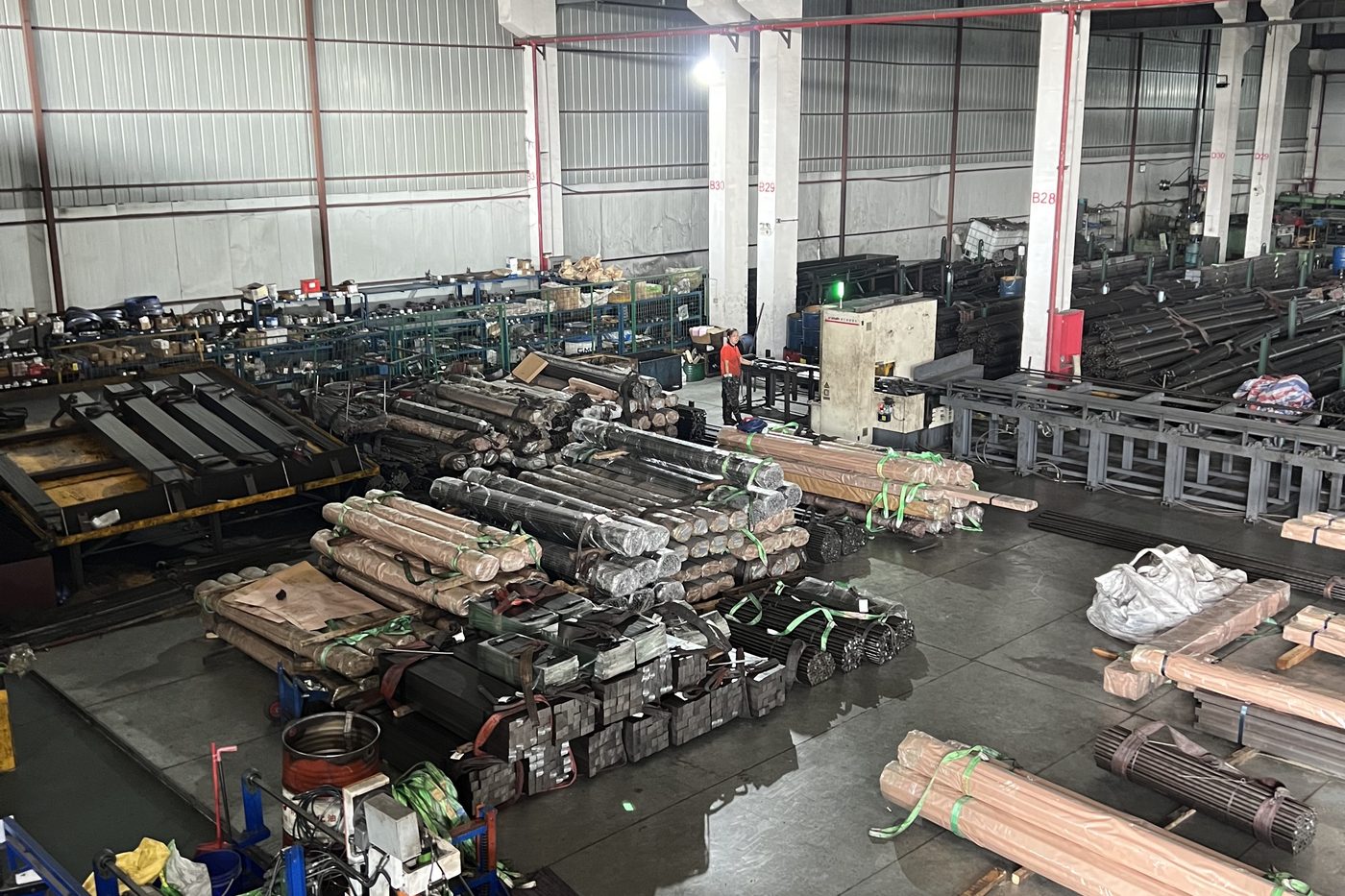
Finished bundles waiting for export packing. Standard sizes ship from stock; custom runs join the queue after inspection.
Before we seal the container, a buyer should have four documents in hand: the mill test certificate for each heat, the actual weight ticket (not a theoretical estimate), a packing list that matches the container photos, and — if you use a third party — the SGS or BV inspection report. We allow buyer-side inspection at the Suzhou workshop, and we can hold the container until your inspector signs off. You can also check our manufacturer page for mill details, or send us your required size range and destination port for a loading estimate.
Standard in-stock sections: packing and loading one 20ft container takes about one to two working days from order confirmation. Custom sections depend on the drawing and heat delivery.
Yes. All wooden crates for export carry the IPPC mark after heat treatment or fumigation, so they clear customs in the EU, US, Australia and other ISPM-15 markets.
Rust-preventive film or VCI paper on every bundle, desiccant in humid-season shipments, and sealed containers. With normal transit conditions, bars arrive with the bright surface intact. If there is transit rust, we replace the affected bundles under the contract.
Yes. Send your mark layout, label design, and any barcoding requirements with the PO, and we apply them before loading.

Experience the outstanding industrial quality of Zhenfu. Our meticulously designed cold-drawn steel can enhance performance in various fields. If you need a customized solution, please contact us and collaborate with Zhenfu.


